
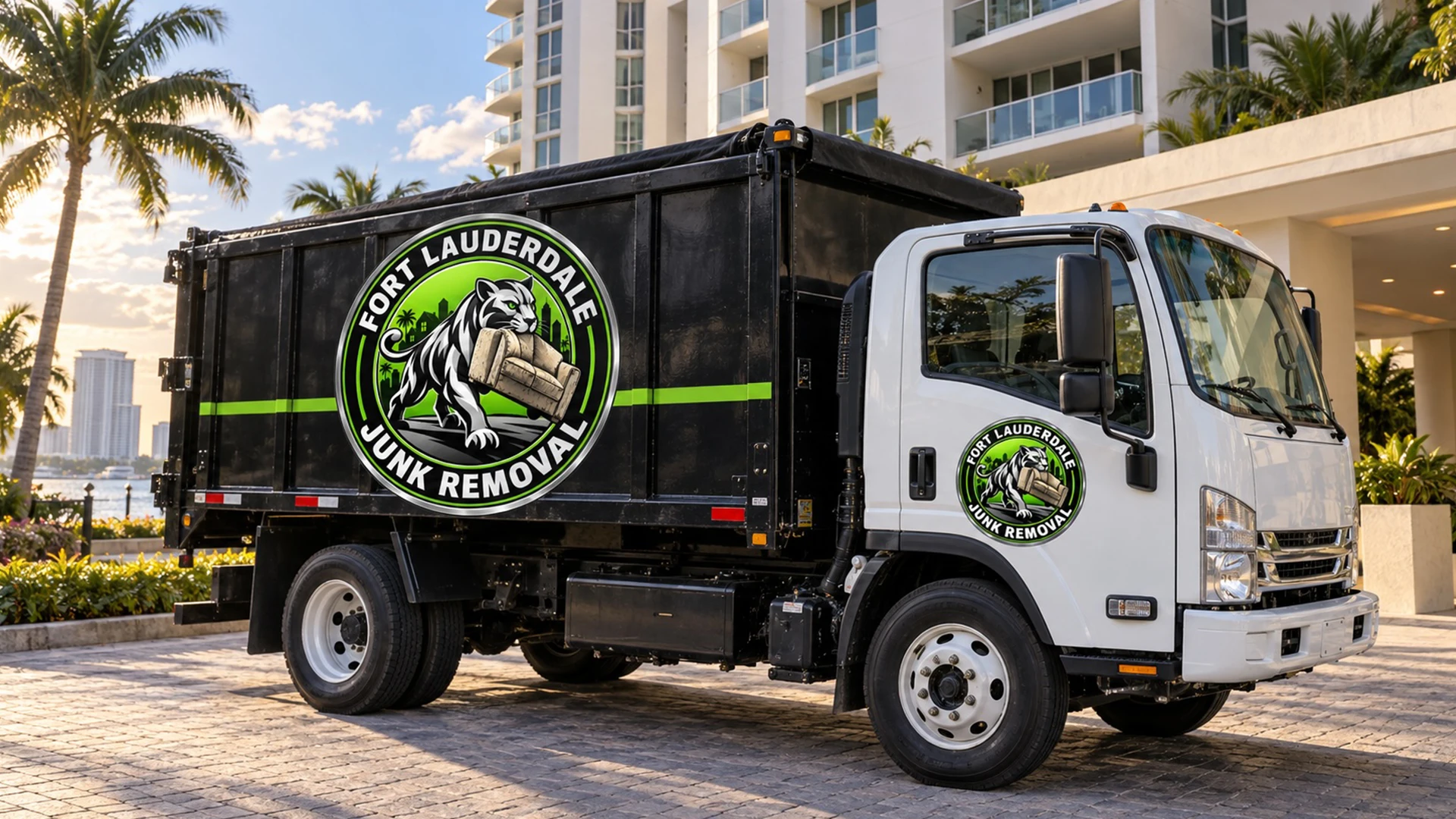
Junk Removal Services in Fort Lauderdale
A sofa in an upstairs bedroom, a condo full of furniture, and a garage packed from front to back each require a different removal plan. Fort Lauderdale Junk Removal helps homeowners, condo residents, families, property managers, and businesses in Fort Lauderdale, Florida, clear unwanted items with attention to what needs to go and how it can leave the property.
Our services cover furniture removal, appliance removal, household cleanouts, estate cleanouts, commercial junk removal, and other ordinary contents and debris within an agreed scope. Some projects involve one item. Others require sorting decisions, building coordination, and removal from several rooms or storage areas.
Tell us what you are clearing, where it is located, and when you need the space available. We can discuss the handling, access, and scheduling details that shape the job.
Call (754) 283-2799 to discuss junk removal services in Fort Lauderdale.
Furniture, Mattresses, Appliances, and Electronics
Furniture removal
Furniture removal includes sofas, sectionals, sleeper sofas, recliners, dining tables and chairs, dressers, bedroom furniture, desks, bookcases, and entertainment centers. A piece does not have to fill a room to be difficult to remove: its construction and the route outside often matter more than its appearance.
Sleeper mechanisms add substantial weight. Sectional pieces may connect underneath, and glass shelves or tabletops need separate handling. A tall dresser may clear the bedroom doorway but leave too little room to turn in the hall. Elevator openings, stair landings, and removable furniture components all affect the approach.
For selective removal, identify the exact pieces leaving and the furniture staying around them. Empty drawers and cabinets of belongings you want to keep. When calling, describe the largest pieces, their location, and any tight turns or assembly that may prevent them from leaving intact.
Mattress and bed removal
Mattresses, box springs, bed frames, headboards, and adjustable bed bases should be identified separately when planning removal. A king mattress and a heavy adjustable base create different handling requirements, even when they belong to the same bed.
Let us know the mattress size, whether the frame needs disassembly, and whether the bed is upstairs or in a condo. The route from the bedroom matters, including hallway turns and elevator dimensions. An adjustable base can be difficult to maneuver through spaces that a mattress can pass through.
You do not need to assume everything must be carried outside before calling. Describe where the bed sits so removal from that location can be included in the discussion.
Appliance removal
Common appliance removal requests include refrigerators, freezers, washers, dryers, ranges, and dishwashers. Tell us the appliance type, approximate dimensions, location, and whether it is freestanding, built into cabinetry, or still connected.
A laundry appliance in a narrow closet requires a different approach from one staged in a garage. Refrigerators may have limited doorway clearance, and freezers can contain water or contents that need attention before movement. Discuss emptying and preparation before the pickup is arranged.
Disconnection is a separate question from hauling. Do not assume plumbing, gas work, electrical work, or refrigerant handling is included. If an appliance remains connected or requires special handling, explain that during the call so the necessary preparation and acceptance can be confirmed.
Television, electronics, and home office removal
Televisions, monitors, computers, printers, and related home office electronics can be discussed alongside furniture or as a separate removal request. Include screen sizes, quantities, and whether equipment is mounted, built into a cabinet, or sitting on a stand.
Older tube televisions can be unusually heavy for their dimensions. Large screens need a suitable carrying route, and loose components should be identified before furniture is moved around them. Wall mounting or other attachment needs advance discussion.
Arrange any needed data backup or erasure before releasing computers or storage devices. Data wiping and secure document destruction require separate arrangements; discuss any requirement for certified electronics recycling before including the equipment.
Whole-Home, Apartment, and Condo Cleanouts
A cleanout may involve selected rooms or contents throughout a property. Moving, downsizing, preparing for a sale, and changes in a household can leave furniture, closets, cabinets, and storage areas needing attention at the same time.
We start with the boundaries of the project. Does the garage count? Are balcony furnishings leaving? Will kitchen cabinets be emptied, or only the freestanding furniture removed? Identifying those areas makes the scope clearer than describing a property simply as a two-bedroom cleanout.
In an occupied home, mark what stays and keep everyday necessities separate from removal areas. Furniture may need to pass through rooms that remain furnished. Discuss access, keys or entry arrangements, and who can answer questions before loading starts.
Condo and high-rise removal logistics
In Fort Lauderdale condos, the route between the unit and the truck can shape the entire job. A short elevator ride may still involve long hallways, several doors, and a loading area far from the building entrance.
Check with building management, the association office, or security before scheduling. Requirements vary by property. Useful questions include:
- Is an elevator reservation required, and which elevator may be used?
- What are the service elevator’s dimensions and available work windows?
- Where may the removal vehicle park and load?
- Are there garage height restrictions, vehicle access limits, or check-in procedures?
- What documentation must the removal company provide for review?
- What protection is required for floors, doorframes, elevators, and shared spaces?
Bring those requirements to the planning conversation early, including any requested insurance documentation, so we can confirm whether the building’s conditions can be met. A reservation should account for the complete removal, including the carrying route and the amount being cleared.
Oversized furniture needs to fit both the elevator doorway and the usable cabin space. Tight corridor turns can present another obstacle before an item reaches the elevator. These details are especially important during condo cleanouts involving several large pieces.
Confirm the approved loading location rather than assuming the front entrance or parking garage will work. Coordinate the building’s permission and elevator availability with our schedule before treating a removal date as settled.
Estate Cleanouts With Clear Decisions About What Stays
An estate cleanout often begins while a family is still deciding what belongs where. A death, a move into care, or an inherited property can leave a household of possessions to review, sometimes with relatives living far apart. Removal becomes more manageable when those decisions are separated from the physical work of carrying things out.
Protect family belongings before removal begins
Start by identifying furniture and household goods that family members want to keep. Set aside photographs, documents, jewelry, collections, and sentimental belongings in a clearly designated area. Check drawers, pockets, storage boxes, and furniture compartments before assigning an entire piece or room for removal.
Clear labels help, but everyone directing the project needs to understand what they mean. A closed door or an unmarked box should not have to serve as an instruction. Identify rooms or groups of belongings that are excluded, and make sure retained items will remain accessible as the property is cleared.
Establish who can direct the work
We need to know who is authorized to identify and approve the contents being removed. If family members have different instructions, resolve those questions before the affected belongings enter the removal scope. Disputed items should remain outside that scope until the appropriate people have settled the decision.
Our role is contents removal. Appraisals, estate sales, legal advice, and decisions about ownership require separate arrangements.
Plan stages when decisions are still underway
Discuss staged removal if only part of the property is ready. Clearing approved furniture and household goods from selected rooms can create working space while other belongings remain under review. Each stage needs defined areas, access arrangements, and an understood scope.
If the property will be sold or used differently, explain the timing and the spaces that need to be emptied. Contents removal, cleaning, repairs, and sale preparation are separate tasks that may need coordination.
Call (754) 283-2799 to explain the property, the belongings involved, and where your family is in the decision process.
Hoarding and Heavy-Clutter Cleanouts
Heavy clutter can make it difficult to see the full extent of a project. Blocked doors, narrow walking paths, unstable stacks, and items hidden underneath other contents affect access and the order of removal.
Describe the conditions as clearly as you can when calling. Explain which rooms are accessible, whether walkways are blocked, and who will decide what stays. You do not need to sort an entire property before having that conversation, but removal decisions need to be clear before loading.
Manageable stages may be worth discussing when a complete cleanout would involve too many decisions at once. Establish the first area’s boundaries and leave undecided belongings outside that stage.
Ordinary contents removal has limits. Suspected mold, pest activity, sewage, sharps, bodily waste, or other contamination can require specialist assessment or cleanup. Tell us about known conditions before work is arranged so suitability and any preparation can be reviewed.
Garage, Shed, and Storage Unit Cleanouts
Garages and storage spaces often combine boxes, old furniture, shelving, tools, exercise equipment, seasonal decorations, and items that still have a use. The challenge is identifying the full scope when the front row hides everything behind it.
Point out retained belongings before clearing begins, particularly tools, family records, and seasonal items mixed into removal piles. Explain whether shelving is freestanding or attached, and mention heavy exercise equipment or containers with unknown contents. Shed contents removal is separate from dismantling or removing the shed itself.
For storage units, discuss facility hours, gate procedures, unit location, stairs or elevators, and the distance to an approved loading area. An interior unit may involve a longer carry than its size suggests. Confirm who can provide access and authorize removal, and allow for another scope discussion if opening the unit reveals substantially more than expected.
Rental Property and Property Management Cleanouts
Turnover work can involve furniture left behind, unwanted contents in a rental, or accumulated items in common storage areas. Property managers may also need contents removal associated with a foreclosure or eviction once disposal has been properly authorized.
Before scheduling, establish which belongings may be removed and who has authority to give that instruction. A property being vacant does not, by itself, settle what can be discarded. Ownership or authorization questions need resolution before affected items are included.
A clear item list helps distinguish furniture left behind from appliances, fixtures, or supplies that belong to the property. Discuss keys, gate access, occupied neighboring units, and any contractors working in the same space. Identify one authorized decision-maker who can address unexpected contents or scope changes during the job.
Office and Commercial Junk Removal
Commercial junk removal can include office desks, conference tables, chairs, shelving, retail fixtures, stockroom clutter, and ordinary nonhazardous contents from suitable business spaces.
An active workplace needs a plan that accounts for staff, customers, and shared routes. A conference table may require disassembly before it can leave the room. Retail shelving may be anchored, and furniture can conceal cables or equipment that must remain in service.
Tell us whether the business will be open, which areas can be used for staging, and when loading is permitted. Building work windows, loading dock access, elevator use, and public entrances may limit the workable schedule.
Identify retained equipment and records before removal. Confidential records destruction, medical waste, industrial waste, and specialized equipment handling require separate confirmation or an appropriate specialist; they are not implied by an ordinary commercial cleanout.
Renovation and Construction Debris Removal
Already-removed cabinets, flooring, carpet, tile, drywall, lumber, doors, and fixtures are common construction debris removal requests. Tell us which materials are involved so acceptance and loading requirements can be confirmed.
Dense debris can reach practical weight limits while leaving space available. Tile and similar materials create different loading demands from bulky cabinets or rolled carpet. Quantity, material type, staging, and the route to the vehicle all affect the removal plan.
Explain whether debris is loose, bagged, or stacked, and whether it is inside the property or staged near loading access. Mention exposed nails, broken glass, and mixed materials. Avoid putting dense debris into containers too heavy to handle safely.
Debris hauling is separate from demolition and licensed trade work. Concrete, masonry, roofing materials, and unusually heavy loads require advance confirmation. Suspected hazardous materials also need review before they are disturbed or included in a removal request.
Yard, Patio, and Outdoor Item Removal
Outdoor removal requests include patio furniture, grills, outdoor storage items, planters, play equipment, and yard debris where accepted. Side-yard gates, narrow passages, uneven surfaces, and limited staging space can make removal more involved than an item count suggests.
Tell us whether planters contain soil, outdoor storage is still full, or play equipment is anchored. Wet materials can weigh considerably more than expected. Rusted connections may complicate dismantling, so explain the condition of bulky outdoor pieces.
For waterfront properties, describe the land access from the items to the loading area, including narrow side paths and areas close to the water. Fuel cylinders, propane, fuel, and other materials needing separate handling must be discussed before a grill or outdoor equipment pickup is arranged.
Storm-related debris
Once conditions are safe, storm-damaged patio furniture, household contents, or loose yard debris may fit within a removal project after assessment. Describe the materials, their condition, and whether they can be reached safely. Waterlogged furniture, scattered sharp debris, and blocked access can change the handling requirements.
Tell us if storm-damaged contents may be contaminated. Tree removal, structural stabilization, disaster remediation, and insurance claim handling need separate arrangements. Availability and scheduling need confirmation after the scope and access have been assessed.
Large and Specialty Items
Hot tubs, pianos, pool tables, safes, bulky exercise equipment, and playsets require a conversation before acceptance. Weight alone does not determine feasibility: a heavy item beside accessible loading space presents a different problem from the same item beyond a narrow staircase.
Provide dimensions, estimated weight or model information, condition, location, anchoring, utility connections, and any known dismantling needs. Mention fragile or unusually heavy components, such as pool table slate. We need to review the handling requirements and access before confirming the scope. Crane work, structural demolition, and specialist moving services should not be assumed to be included.
From Your First Call to an Organized Removal Plan
A useful first call gives us a picture of the contents and the property. Have the following details ready where possible:
- The address, property type, and rooms or areas involved.
- The items, approximate quantities, and unusually heavy pieces.
- Floor level, stairs, elevators, tight turns, and carrying distance.
- Parking, loading access, narrow driveways, gates, and entry procedures.
- Building requirements and permitted work windows.
- Disassembly, attachment, or appliance disconnection questions.
- Timing needs and the person authorized to direct removal.
Describe anything you cannot yet assess. A packed storage room or unknown equipment weight may need further review before the scope can be confirmed.
Before loading, walk through or otherwise clearly identify what goes and what stays. For partial cleanouts, occupied homes, and estates, a defined removal area helps prevent uncertainty. Additions or changed instructions need discussion because they can affect handling, price, and timing.
Protecting the property along the carrying route
Property protection begins with the route: doorway widths, tight turns, floor transitions, nearby furnishings, and shared spaces. Loose shelves, glass components, and unstable drawers need attention before the surrounding furniture is moved. We plan where padding or floor protection is appropriate for the contents and access conditions.
Discuss the finishing cleanup included in the job. Removing contents does not automatically include deep cleaning, repairs, or making a property fully ready for sale.
What Affects a Junk Removal Estimate?
An estimate depends on what is being removed and what it takes to remove it. Volume matters, but equal amounts of space do not always represent equal work. Several light chairs, dense tile debris, and a heavy sleeper sofa have different handling requirements.
The main considerations include quantity, material type and weight, labor, stairs, elevator use, long carries, disassembly, loading access, and any special handling or disposal requirements. A whole-property cleanout also needs a defined room-by-room scope, including cabinets and storage areas that may be easy to overlook.
Explain these conditions when calling and ask what information is still needed to establish the estimate. Before work begins, understand which items and labor the quote includes, what preparation is expected, and how additional items or changed conditions would be addressed. That conversation helps keep the agreed job clear for everyone involved.
Donation, Recycling, and Materials That Need Review
Reusable furniture and household goods may be donation candidates when their condition and a receiving organization’s requirements allow. Acceptance can depend on cleanliness, completeness, size, and current capacity. Discuss your preferences, but do not assume every usable item can be donated.
Recycling options depend on the material and available outlets. If a particular destination matters to you, raise that before arranging removal so the available options can be discussed. Donation, recycling, and landfill diversion cannot be guaranteed for every item.
Some materials require advance review or a different provider, including chemicals, paint, fuel, propane, asbestos-containing materials, medical waste, and contaminated contents. Keep these identified and separate from ordinary removal items. Describe unknown containers or questionable materials instead of mixing them into a general debris pile.
Frequently Asked Questions
Can you remove one item, or does the job need to be a full cleanout?
We can plan a single-item pickup or a larger cleanout. For one item, its dimensions, weight, and location help define the work. For a full property, include closets, cabinets, balconies, garages, and other spaces you want cleared so the scope reflects the contents involved.
Do I need to carry everything outside first?
No. Describe the items where they currently sit so interior removal can be reviewed. Do not move a heavy piece onto stairs or into a hallway just to prepare. Confirm any preparation needed, particularly emptying furniture or arranging appliance disconnection, during the call.
Who arranges the condo elevator and building permission?
Start with management or the association office to learn the property’s process. Then discuss who must submit requests, provide documentation, and confirm the reservation. Coordinate approval and the removal schedule together; an available elevator slot alone does not establish a confirmed pickup.
Can an estate cleanout leave selected belongings in place?
Yes, a cleanout can be scoped around selected belongings or rooms. Identify retained items clearly and establish who has authority to make decisions. If relatives are still reviewing certain contents, exclude those items from the current scope and discuss whether separate stages make sense.
Can I arrange a cleanout while I am out of town?
Discuss the property’s access arrangements, your authority to direct removal, and how the items will be identified. A local contact may help resolve questions. Confirm what presence or communication arrangements are needed before scheduling, particularly if keys, building security, or undecided belongings are involved.
What information helps you discuss an estimate?
Start with the address, property type, item list, and approximate quantities. Include floor level, stairs, elevators, parking, and heavy pieces. For debris, identify the materials; for a cleanout, identify each area. Explain what remains uncertain so we can discuss what further review is needed.
What if there are stairs or difficult access?
Describe the number of flights, landing turns, narrow openings, and distance to loading access. A large item may fit through a doorway yet fail to turn on a landing. Access can affect feasibility, labor, and price, so it needs review before removal is confirmed.
Will you disconnect my appliances?
Disconnection needs to be confirmed separately from hauling. Tell us whether the appliance is connected to plumbing, gas, or electricity, or built into surrounding cabinetry. Confirm what must be completed before hauling and whether a qualified trade professional needs to prepare the appliance separately.
Do you accept pianos, safes, hot tubs, or pool tables?
These items require individual review. Provide dimensions, weight or model details, location, and information about anchoring, utilities, and access. An item that needs to be carried intact may require a different approach from one approved for dismantling. Acceptance depends on the handling requirements.
Will usable items be donated or recycled?
Potentially, depending on condition, receiving requirements, material, and available outlets. Separate items you hope to donate from damaged or contaminated contents and discuss them before scheduling. If you need a guaranteed destination, confirm whether that requirement can be accommodated before including those items.
What materials need separate review?
Identify chemicals, paint, fuel, propane cylinders, suspected asbestos, medical waste, and contaminated contents before scheduling. Unknown liquids and unlabeled containers also need discussion. These materials may require a different provider and should not be placed inside furniture or mixed with ordinary debris.
Can removal be coordinated with a move, closing, or turnover?
Explain your target date, building restrictions, and other scheduled work early. Confirm availability and leave room between contents removal and cleaning, repairs, or handover when possible. A closing or delivery date helps us understand your needs, but completion timing must be agreed before relying on it.
Talk With Us About What Needs to Go
Whether you are replacing a bed, clearing a condo, or organizing an estate, start with the items and the space they occupy. We can discuss the scope, access, building requirements, and timing so you understand what needs to be arranged.
Call (754) 283-2799. Tell Fort Lauderdale Junk Removal what needs to go, where it is located, and when you need the work done.
Call or Text (754) 283-2799