
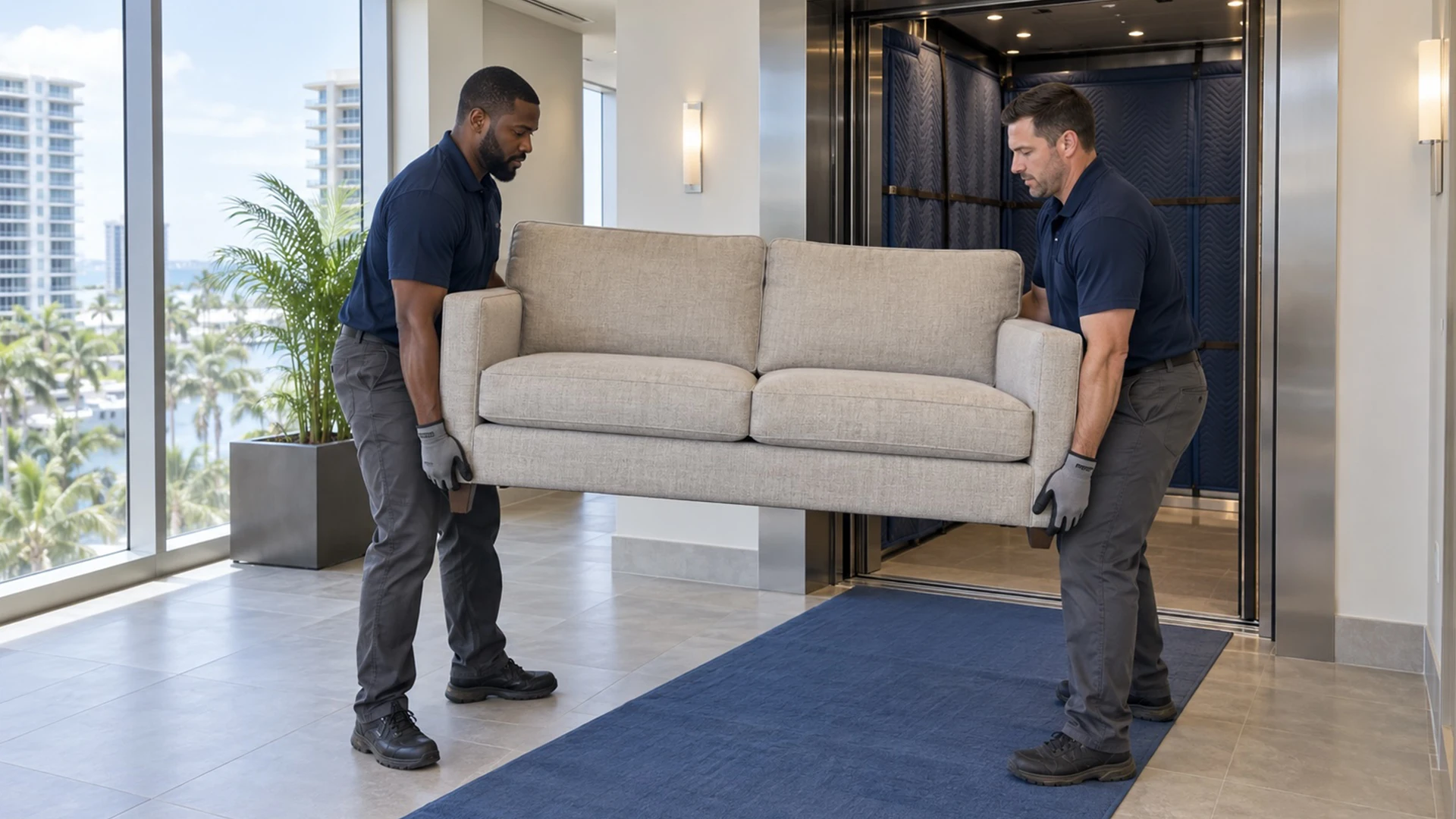
Galt Mile Junk Removal for Condo Furniture and Cleanouts
The new sofa is on order, a bedroom needs clearing, or a family member is leaving a condo with furniture that cannot go along. Getting those pieces out means working through doorways, an elevator, and shared spaces before anything reaches the truck.
Fort Lauderdale Junk Removal serves Galt Mile with condo furniture removal planned around the items and the building. Whether you need one mattress removed or help clearing several rooms, our Galt Mile junk removal planning includes elevator arrangements, building access, and an approved loading location.
You do not need every answer before contacting us. Start with the furniture and the address, then tell us what management has already explained.
Request an estimate by texting (754) 283-2799 with furniture photos, your building address, and your preferred timing.
Why a Condo Removal Needs More Than a Furniture List
Galt Mile, also called Galt Ocean Mile, is a Fort Lauderdale neighborhood lined with high-rise condominiums, as the Galt Mile Community Association describes. That setting makes the route through the building an important part of the job.
A shared elevator may need to remain available to residents. A controlled entrance may require staff to admit the crew. The shortest path on a floor plan may cross a lobby that management does not permit contractors to use.
Even one heavy piece can involve several arrangements. A large cabinet might need its shelves removed, a doorway measured, and a turn checked before anyone lifts it. Counting it as one item tells us very little about that work.
For Galt Mile furniture removal, useful planning connects each stage: leaving the unit, reaching the approved elevator, passing through the service entrance, and loading the truck. A problem at any point can affect the entire appointment.
Furniture Removal, From One Piece to Several Rooms
Tell us which pieces you want removed, including anything outside the main living area. A patio set or a bed frame in a storage space can be easy to miss when the conversation starts with the living room.
Common furniture requests include:
- Sofas, sleeper sofas, and recliners. Sleeper mechanisms add substantial weight, and reclining parts can shift during handling. Mention these features even when they are hidden in the photographs.
- Sectionals. Separate sections may make removal more manageable, but connectors need checking before pieces are pulled apart. Include the chaise, corner section, and any powered components in your description.
- Mattresses, box springs, and bed frames. A mattress and its foundation behave differently in a tight turn. Storage beds, tall headboards, and bulky frames may need disassembly reviewed in advance.
- Dressers, desks, and entertainment furniture. Empty drawers and cabinets beforehand. Tell us about glass shelves, stone tops, wall attachments, or unusually heavy construction.
- Dining sets and patio furniture. Count the chairs separately. Identify whether a glass tabletop lifts off or is secured to its base; it should not ride loose on the table during a carry. Weathered outdoor frames may be less stable than they appear.
For larger Fort Lauderdale condo cleanouts, define the rooms and contents included. “Clear the bedroom” could mean removing the bed alone or removing every approved piece in the room.
Disassembly and unusually heavy furniture require advance review. Identifying them early helps establish suitable labor, equipment, and scope before the building reservation is committed.
Getting the Elevator Arrangements Right
Start by asking management which elevator furniture crews may use. Some properties have a designated service elevator; others have procedures for reserving a shared car. Procedures, permitted days, and work windows belong to the individual building.
Confirm who submits the reservation and how approval is communicated. Ask whether staff must enable service access, install protective padding, or meet the crew. A request sent to the office is not necessarily an approved reservation.
The permitted window needs to account for checking in, preparing the route, moving furniture, and getting the last piece to the truck. Ask when the elevator must return to normal use and whether loading has a separate cutoff. A reservation that ends while furniture is still downstairs leaves unfinished work.
Check the Whole Path for Oversized Furniture
The elevator opening and the usable interior both matter. A tall cabinet might fit inside the car but fail to pass through its doors in the position needed to get it aboard. Installed padding and handrails can reduce usable space.
Measurements should also cover the condo doorway, the approach to the elevator, and any tight corridor turn. A long sofa needs space to change direction. Knowing that it fits inside the elevator does not establish that it can reach the opening.
Provide dimensions or available building specifications, but do not strain yourself trying to tip a heavy piece for a measurement. Photos of the furniture and narrow points help identify what needs closer inspection.
If the approved route does not work, our crew needs to stop and reassess. Rechecking dimensions or discussing safe disassembly may reveal an option. Removing a structural furniture component, using stairs, or attempting an exterior route cannot be assumed. Any alternative needs review, appropriate authorization, and confirmation that it can be performed safely before work continues.
Planning the Loading Location and Truck Access
The street address identifies the property; it may not identify the entrance the crew needs. Ask for directions to the approved service entrance and loading location, including any gate or check-in point.
For properties on Galt Ocean Drive, confirm designated loading arrangements and current posted street restrictions. The association has published specific guidance on commercial loading areas along Galt Ocean Drive, making curb access something to check before arrival.
Vehicle clearance matters wherever the route passes beneath an overhang, through a gate, or into a garage. Passenger-car access does not establish truck access. If dimensions or vehicle restrictions apply, share them before a loading plan is agreed.
The distance from the elevator to the truck also affects the work. Several trips along a long service corridor take time even when the elevator ride is short. Mention ramps, thresholds, and changes in floor level along that route.
A loading area may also serve delivery drivers or other contractors. Confirm whether a separate reservation is required and who should be contacted if the space is occupied.
Furniture should move through the approved route without turning common areas into a holding pile. Entrances, walkways, and exits need to remain usable. Coordinating elevator trips with loading keeps items moving and helps the work stay within the building’s approved window.
Working With Management, the Association Office, and Security
The person approving removal and the person controlling building access may be different people. You may own the furniture while the management office controls reservations and security controls entry. Each needs the information relevant to their role.
Identify the appropriate building contact before booking. Confirm arrival procedures, the unit being serviced, where the crew should report, and whether an owner or authorized representative must be present. Share written instructions so the work is not dependent on a message being remembered at a shift change.
If the building requests vendor documents, obtain its requirements early. A certificate of insurance summarizes policy information. Ask management for its written requirements, including coverage types and amounts, the name and address to show on the certificate, and any supporting policy documents. A sample certificate or vendor packet can help clarify the request.
Send those requirements for review before booking so we can determine whether they can be met. Do not assume a document is sufficient until the building has accepted what it requires.
Building staff help keep access orderly for everyone who lives there. Clear instructions give them a workable arrival plan and give our crew a clear place to begin.
Protecting the Condo and Shared Spaces
Preparation starts inside the unit. Identify what leaves, what stays, and the path between the furniture and the door. Move small personal belongings out of that path when practical; leave heavy repositioning for the agreed removal work.
Before movement begins, our crew reviews tight corners, door frames, floor transitions, and nearby items that need protection. Suitable floor coverings, furniture blankets, and handling equipment should match the surfaces, furniture, and building instructions. Equipment needs enough room to operate without pressing a load against a wall or doorjamb.
Elevator protection needs its own check. Establish whether the building supplies and installs padding or expects another arrangement. Loose or bunched floor protection can create a problem of its own, so coverings need to remain secure as the work proceeds.
In an occupied hallway, a neighbor may need to pass with groceries or a walker. Furniture movement needs to allow for that safely. Nobody should have to squeeze between a heavy load and the wall to reach their door.
Keep furniture being retained clearly identified. Empty drawers of documents, keys, jewelry, medications, and family keepsakes before approving a dresser for removal. A label on the dresser does not tell anyone that one drawer still holds belongings you need.
At completion, review the agreed removal areas and raise any concern while the crew is still present, where practical.
Planning Around Residents, Deliveries, and Family Decisions
Furniture removal often fits between other obligations: a delivery appointment, listing photographs, a closing date, or an owner’s flight. Share the actual deadline and what depends on it. Requested timing still needs to be checked against crew availability and building approval.
Suppose a resident is replacing a sectional. The delivery company offers a morning window, but the building allows only one furniture crew to use the elevator at a time. Overlapping appointments could leave two crews competing for the same access. Separate approved windows, with room between them, create a more workable plan.
Suppose a family is clearing a condo before sale. A daughter is coordinating from another state, her father still uses a recliner, and the agent needs the remaining furniture removed before photographs. An illustrated removal list and a clearly marked “keep” instruction for the recliner keep the instructions specific about what can leave.
For seasonal owners or anyone arranging work while away, agree on access authorization, a local contact if needed, and someone reachable for decisions. Confirm how keys or entry permissions will be handled with the building. Security admitting a crew does not give that crew permission to choose what leaves.
Property managers should also identify who can approve changes. One clear decision-maker helps when the furniture present differs from the original list.
What Helps Us Prepare an Accurate Estimate
A useful estimate describes both the furniture and the work needed to remove it. Call or text (754) 283-2799 with the following information:
- Photos showing each item, plus a wider view of the room where useful.
- Item quantities, approximate dimensions for oversized pieces, and details such as sleeper mechanisms or glass tops.
- The building address, unit floor, and elevator availability.
- Known doorway restrictions, corridor turns, and the distance to the approved loading location.
- Any disassembly needs, access instructions, building documents, and requested dates or deadlines.
Volume, weight, labor, disassembly, carrying distance, access, and disposal requirements can affect the scope and estimate. The floor number helps describe the location; elevator availability and the actual route explain how the work gets done.
A photograph-based estimate depends on what the photographs and your description show. Our service agreement identifies the approved work and its price or pricing method. If conditions differ materially or you request additional work, we explain the proposed change and price for your approval before performing that additional work.
A 50% deposit of the approved estimate is required to schedule the pickup. The remaining balance is due when the approved work is complete, before the truck leaves. A requested date becomes a confirmed appointment after the required deposit and our appointment confirmation; building access must also be arranged.
Text (754) 283-2799 with your furniture photos and access details to request an estimate. Include any elevator window already offered by management.
Donation Possibilities and Disposal Expectations
Tell us before booking if donation is a priority. Furniture condition, suitability, transportation, and recipient acceptance all affect whether that is possible. A clean, usable piece may still be declined because of its size, construction, or a recipient’s available space.
Photos should show relevant wear, stains, damage, and missing parts. Keep potential donation pieces dry and protected while arrangements are considered. Furniture left exposed to weather can lose whatever reuse potential it had.
Any specific donation arrangement needs to be agreed in advance, including what happens if the recipient declines an item. We do not guarantee donation, recycling, or a donation receipt unless a specific commitment has been agreed in writing.
Recycling likewise depends on the materials and available facility acceptance. The approved removal scope should make the handling and disposal arrangements clear enough for you to know what you are authorizing.
Questions About Galt Mile Condo Furniture Removal
Can you remove just one sofa, mattress, or other piece?
Yes, you can request removal of a single piece. Identify its type and size and explain the building access. A one-item appointment still needs the permissions and route appropriate to that item; a sleeper sofa deserves a different description from a lightweight chair.
Who arranges the elevator reservation?
You or your authorized representative should arrange the necessary reservation through the building. Share the approved window and instructions with us. If management needs scheduling information from the removal company first, explain that sequence so the appointment and reservation can be coordinated.
What if management requests insurance or vendor documents?
Obtain the building’s written requirements and send them before booking. We need to review whether the requested conditions can be met. Include the office contact and submission deadline so documents can be evaluated before the appointment depends on their acceptance.
What happens if the furniture might not fit the elevator?
Flag it during the estimate request. Dimensions, photographs, and the approved route help determine whether closer assessment or disassembly review is needed. Do not assume that the way furniture originally entered is still available, particularly if doors, flooring, or the furniture itself have changed.
Where will the truck park and load?
The loading position needs to be permitted and workable for the vehicle. Confirm the building’s designated location and any reservation or clearance restrictions. If that location becomes unavailable, contact the appropriate building staff to resolve access before furniture begins coming down.
What information is most useful for an estimate?
Start with the address, furniture photos, item count, floor, and elevator details. Then add anything the photos cannot reveal, such as a hidden sleeper mechanism, a long carry, or required disassembly. You can flag unanswered building questions for follow-up.
Can removal be arranged while the owner is away?
An unattended removal requires agreed access and clear written instructions. Identify the authorized contact, mark items that must stay, and arrange for someone to answer questions during the work. Discuss any requested completion updates before booking so expectations are clear.
Can usable furniture be donated?
Possibly, depending on condition and acceptance. Raise the request before scheduling so a specific arrangement can be considered. Keep any piece you want donated clearly identified, and agree on the alternative if no suitable recipient accepts it.
Start With the Furniture and the Building Address
Contact Fort Lauderdale Junk Removal at (754) 283-2799 with your Galt Mile building address, furniture photos, and known access requirements. Include your preferred date and any firm deadline.
We’ll use those details to define the removal scope, review the building requirements, and explain the next steps for scheduling. The goal is a clear plan for getting the right furniture from your condo to the truck.
Call or Text (754) 283-2799